If you’ve recently searched for a complex topic on Google—say, comparing the best personal finance tools or understanding a new tech framework—you might have noticed a prominent, AI-generated summary sitting above traditional search results. That’s Google AI Overviews, a game-changing feature reshaping how users access information and how content creators reach their audiences.
What Are Google AI Overviews?
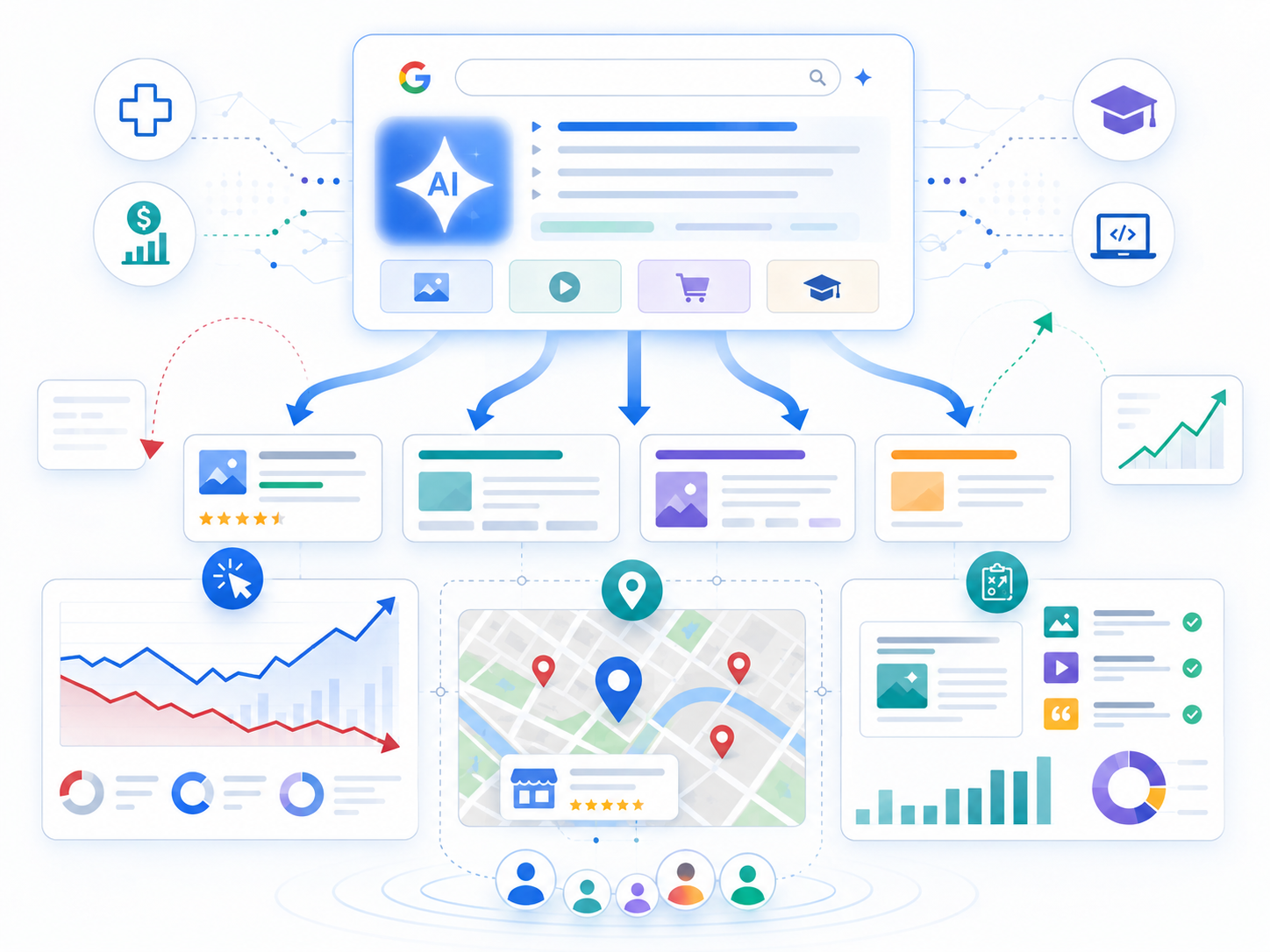
Built on large language models, Google AI Overviews synthesize information across multiple web pages to deliver a cohesive summary directly at the top of search results—without replacing traditional webpage links. The feature’s structure varies by query complexity: it typically includes a written explanation (ranging from a few hundred words in paragraph form, bullet points, or a mix), plus 4 to 8 supporting source links. Visually, it dominates most of the first screen on mobile devices, while on desktop it coexists alongside other SERP elements like traditional rankings and local packs.

When Do Google AI Overviews Trigger?
The feature activates when Google’s algorithm determines a query requires synthesized information rather than a simple keyword match—most often when users are in a learning or comparison-decision phase. Query types that trigger AI Overviews prioritize informational searches first, followed by commercial queries; navigation and transactional queries are rare. Since October 2024, however, the share of commercial, transactional, and navigation queries triggering the feature has increased. Overall, AI Overviews appear in roughly 13% of all searches, with higher adoption in information-dense industries like health, finance, education, and technology. For local queries, pure local-intent searches trigger the feature about 15% of the time, while local searches with an informational intent see AI Overviews in 92% of cases.
How AI Overviews Differ From Other Google Search Features
It’s critical to distinguish AI Overviews from other Google tools to understand their unique role:
- vs. Traditional Search Results: Traditional rankings display individual web pages based on relevance, while AI Overviews combine insights from multiple sources into a single, curated summary.
- vs. Featured Snippets: Featured snippets extract content from a single webpage, whereas AI Overviews aggregate information across multiple sites. Notably, the visibility of featured snippets has declined as AI Overviews have rolled out.
- vs. Google AI Mode: AI Overviews serve as a SERP-based summary for quick information discovery, while AI Mode offers a conversational interface for deep, iterative exploration of a topic.
The Impact of Google AI Overviews on the Search Ecosystem
AI Overviews are reshaping how traffic flows and how brands connect with users:
- Traffic Shifts: For surface-level informational queries, AI Overviews may reduce clicks to individual web pages as users find answers directly in the summary. However, for comparison or decision-focused queries, the feature drives higher-quality clicks with longer average session times, as users use the summary to identify relevant sources.
- Local SEO Effects: AI Overviews often appear above local search packs, and may mention local business information. For local brands, creating clear, detailed service explanations can boost early trust and visibility in these summaries.
- Industry-Specific Impacts: Industries requiring deep information comprehension—like health, finance, education, and technology—see the most significant impact. Conversely, e-commerce product searches and pure navigation queries are minimally affected.
Accuracy and Content Source Guidelines
While AI Overviews offer convenience, they carry a risk of "information hallucinations," which stem from conflicting, outdated, or unstructured content across source web pages. Importantly, Google allows AI-generated content as a source for AI Overviews, provided the content meets the E-E-A-T (Expertise, Experience, Authoritativeness, Trustworthiness) standards.
Optimizing for (or Opting Out of) Google AI Overviews
Content creators and marketers have two key strategies to engage with this feature:
- Opting Out: To prevent your content from being included in AI Overviews, you can use the
nosnippetmeta tag, wrap specific content indata-nosnippettags, or set amax-snippetparameter to limit the amount of content Google can use. - Optimizing for Inclusion: Increase your chances of being featured by creating clear, structured content that prioritizes explanations and comparisons. Tools like Semrush One can help monitor your content’s visibility in AI Overviews and identify optimization opportunities.
As Google continues to refine AI-driven search features, understanding AI Overviews is no longer optional for marketers and content creators. By aligning your content with the feature’s trigger rules and optimization best practices, you can turn this shift in search behavior into an opportunity to reach users at critical stages of their journey—whether through featured source links or direct visibility in the AI-generated summary.